The Un-Office Christmas Party

Last December I was at a few lunches and drinks parties where a number of people said – I’m treating this as my Christmas party because I don’t have an “official” one to go to.

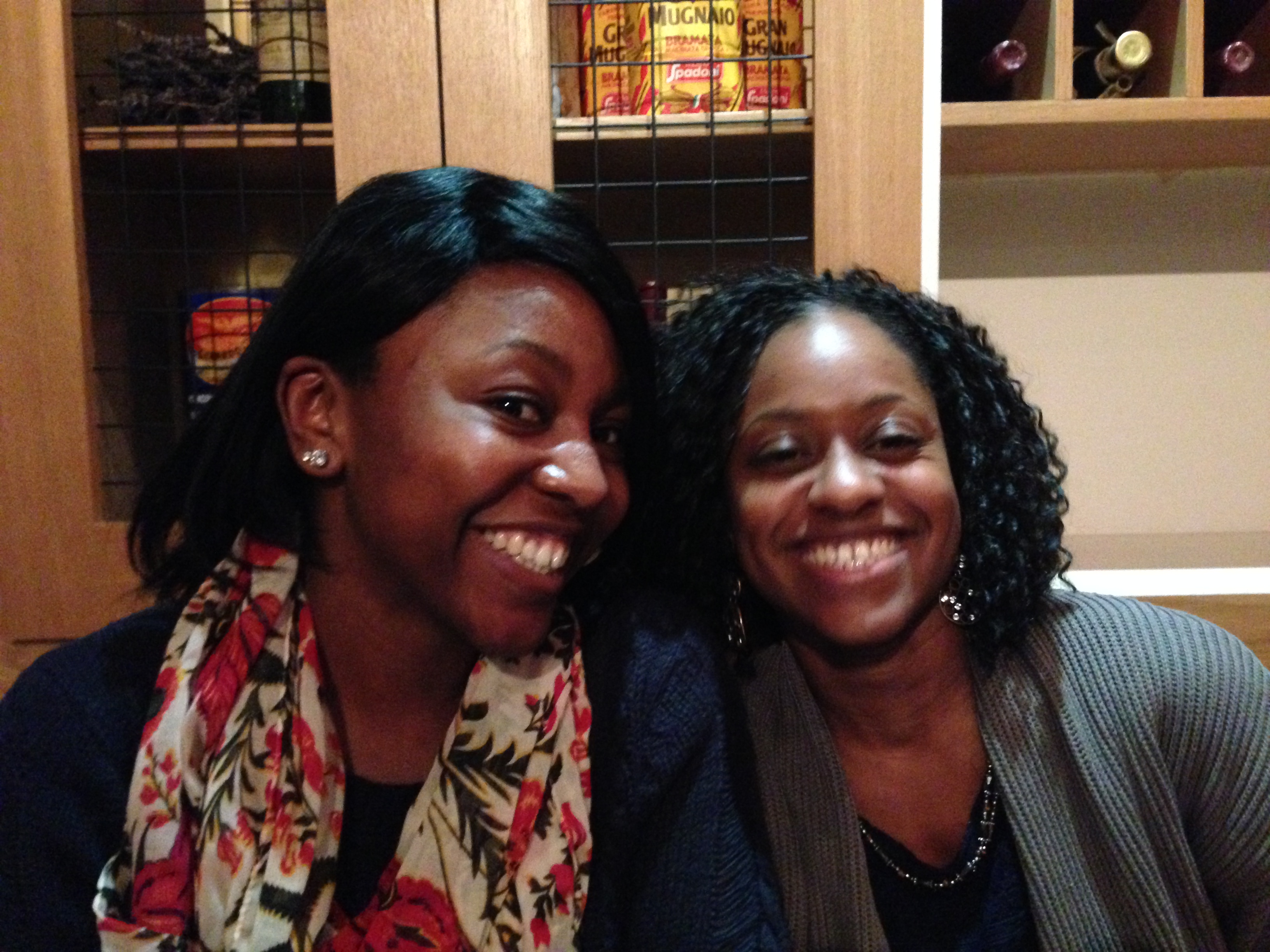
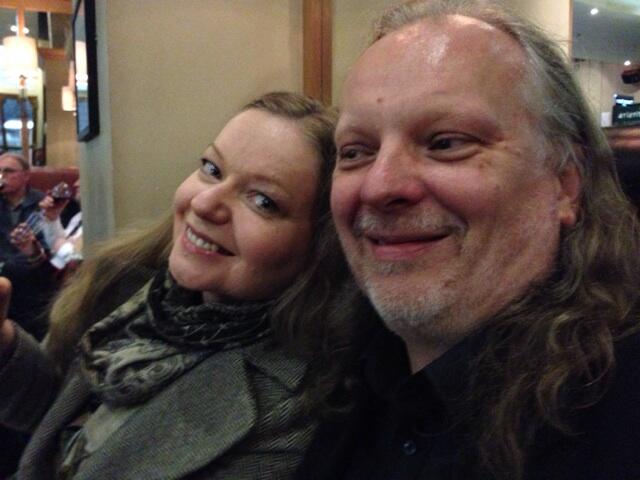
Anke Holst & John Popham, KIngs Cross, December 2013

Anke Holst & John Popham, KIngs Cross, December 2013

These two lovely people, Anke Holst (@the_anke) & John Popham (@johnpopham) were at one such impromptu drinks meetup in a Kings X pub that loads of other people, most of them one-man bands, turned up to.

I’m considering trying to organise something in London for this December, if anyone from my sole trader/entrepreneur/lone wolf/freelance consultant/one-man band network is interested.  After all, Christmas is only 108 days away…maybe early evening dinner somewhere fun on Tuesday 16 December?

Give me a shout on Twitter or in the comments below if you’re in.

10 under 30 – female fire starters to watch

My gift to you today is a list of the 10 young women under 30 in my own network that I admire immensely and believe are ones to watch.  This blog is loosely connected to my other posts on women in tech and is also a nice precursor to a couple of events I’m speaking at over the next few weeks (Create: 2014 at CultureTECH in Derry on 17 Sept and Digital Women Teacamp at the NAO on 9 Oct).

I don’t think anyone else out there will know ALL the remarkable women on this list so this blog will allow those that are listed to find each other and it will alert everyone else to their existence – so that you can all find and follow them.

The women on this list are very different from each other but there are a number of common threads that unite them.  They’ve all started something interesting of their own, or are poised to start something.  They’re all friendly but tenacious, busy but generous with their time, smart but hungry to learn more, successful but humble.

Anyway, without further ado and in no particular order, here’s my list:

Sheree Atcheson, Kainos

Sheree Atcheson of Kainos

Sheree Atcheson @nirushika
In her day job Sheree works as a software engineer at Kainos in Belfast. She founded Women Who Code UK as one of her many sidelines and she was one of the organisers of the Belfast Technology Conference earlier this year, attracting and engaging with speakers from the US and elsewhere. Sheree works tirelessly to promote STEM career options to younger people and she uses a quote on women in tech that I love – “in order to be in tech, you do not need to be a man, a “geek” or a “nerd”. All you need is to be interested.”
Sheree is an excellent role model for younger women and girls who are considering a career as coders and we’re working together in December at Queen’s University on just such a workshop.
You can find out more about Women Who Code UK & Sheree here http://womenwhocode.co.uk/tag/sheree-atcheson/

Serena McCrossan @serenamc
I worked with Serena at Learning Pool where she’s a Digital Marketing Exec.

Serena McCrossan Learning Pool

Serena McCrossan Learning Pool

Serena started her own business, Innov8 Marketing, in her final year of university when she was 21 and ran that for a few years. She wrote a very honest blog about her own startup experience that you can read here http://giveitsomesparkle.wordpress.com/2012/04/19/business-failure-is-never-fatal-a-story-of-bravery/ I like the way Serena managed to take the positives from her Innov8 experience and she’s definitely living proof that walking through treacle only makes you stronger.
Serena’s one of the most confident and self-assured young women I’ve ever met & she also knows more about SEO and web lead generation than anyone else I know. It’s great that she’s working at Learning Pool but a little bit of me wonders from time to time how awesome the next business she starts by herself will be.

Olwen Sheedy, PWC Dublin

Olwen Sheedy, PWC Dublin

Olwen Sheedy @OlwenSheedy
Where to start with Olwen! She’s the most organised person I know and a definite contender for the person who has achieved most, lived in the most places, knows the most people and is still well under 25. Hey – she’s even appointed her own “personal” board of directors. Isn’t that a cool idea – think of all the support you need in the various parts of your life & then slot people in. You don’t even have to tell them if you don’t want to!
I met Olwen when she was working for Enterprise Ireland in London, helping Irish businesses get a foothold in the UK market, but she already had a US track record under her belt long before she got here and she’s now joined PWC in Dublin. Olwen – London’s missing you already & I’m expecting great things from you.

Immy Kaur @ImmyKaur

Immy Kaur, Hub Birmingham

Immy Kaur, Hub Birmingham

Everything that Immy does is about using her own considerable personal energy to make positive change happen for other people and society. Her projects have all been deeply seated in social good and it’s remarkable to see such a gifted young person focus her energies in this way. The world would be a very different place if only there were a few more like Immy around.
In the short time that I’ve known her I can just tell she’s one of those people that gets things done very quickly without much in terms of resources – the best sort of person but one that’s in short supply.
She’s Co-Founder of Hub Birmingham – and I quote “Hub Birmingham is focused on making Birmingham more equitable, more democratic, more wondrous and a home for the 21st century. Made in Birmingham, Made by Birmingham, Made for Birmingham.” Keep on keeping on Immy – I can’t wait to see what you have in store for us when you’re the PM.

Charlotte Jee, ComputerworldUK

Charlotte Jee, ComputerworldUK

Charlotte Jee @CharlotteJee
Charlotte is senior reporter at ComputerworldUK covering government/public sector and how they use (and abuse!) technology. Like Elaine (see later) she gets to mix with and interview a lot of cool tech people in her job. Charlotte starting working whilst she was still at university, writing newswire (three-sentence ticker stuff you see at the bottom of Reuters screens) on the pharma industry for a couple of years.
I feel as if I’ve known Charlotte for years but that’s probably because she’s a networker and a party goer with her finger right on the pulse of government. I love that she calls herself a “government botherer” on her Twitter bio.
My hope is that Charlotte is going to collect lots and lots of scurrilous information about Whitehall personalities and then publish a no-holds-barred book for us all to enjoy.

Elaine Burke @CriticalRedPen

Elaine Burke, Silicon Republic

Elaine Burke, Silicon Republic

Elaine is a Dublin based tech journalist who works for Silicon Republic, Ireland’s awesome online source of technology news. She writes for traditional print media too and has authored a couple of chapters of a book coming out later this year on Dublin’s Silicon Docks. When she’s not writing about tech, she’s talking about it on the radio. Elaine was named Tech Journalist of the Year in the 2013 Journalism and Media Awards (also known as the JAMs).
We first met in real life when Elaine was interviewing me on camera about my views on women in tech. What a job as I hate being filmed. I was so impressed by Elaine’s thorough preparation, quiet composure and command of her technical team.
Basically Elaine has one of the coolest jobs in tech where she gets to meet lots & lots of tech startups, tech glitterati and even better, sample and review all the latest gadgets. I’m looking forward to seeing what happens when she starts something herself!

Sarah McBride, Create: 2014

Sarah McBride, Create: 2014

Sarah McBride @SMB_Business
Sarah is one of the youngest women on my list. I’ve worked with Sarah on the Create: 2014 conference that’s happening at CultureTECH festival in Derry on 17 September (it’s not too late to join us) and have been thoroughly impressed with her professionalism and level of ambition.
Sarah just got her “A” Level results this summer (I know she’ll hate me saying this but she got 4 As) and is starting at University of Bath next month. It’s wonderful to meet such a motivated young person and I have no doubt whatsoever that we’ll see Sarah starting her own business before too long.


Lyra McKee @LyraMcKee

Lyra McKee, Beacon Reader

Lyra McKee, Beacon Reader

Lyra is a Belfast based investigative and independent journalist. I first met her at a Barcamp in Derry back in 2009 when she was an achingly young startup founder & CEO but I was immediately struck by her passion and fire. At that time, Lyra had founded (and self funded with 3 of her friends) a startup called NewsRupt, an intermediary company that allowed news editors to bid on stories created by freelance journalists. I’ve since watched her get a number of her own ideas up and running as well as working in other people’s startups on the side to earn a bit of cash.
Lyra is full of great ideas and she’s forever rooting for the underdog. I know that one of these days she’s going to pull off something big. You can read her blog here http://muckraker.me/

Lily Dart, dxw

Lily Dart, dxw

Lily Dart @Lily_Dart
Lily is a graphic designer and front end developer for public sector web design business dxw. She describes herself as a “geek and feminist”. We’ve recently been working together on the preparation for the second #DigitalWomen Teacamp event that’s happening on 9 October at the NAO.
I first encountered Lily at one of the UK Govcamp events a couple of years ago and was impressed by her straight talking about what it’s like being a young female web developer working in a largely all male environment and her useful advice for other young women.
I love that Lily (like Charlotte) started working as a freelancer whilst she was still at university, earning money and building her network. We need more women like Lily in tech.

Emma Leahy @emsiememsie

Emma Leahy, Get Invited

Emma Leahy, Get Invited

I first met Emma when she was the Editor at Sync NI, Northern Ireland’s most respected technology, science and innovation magazine. I was bowled over by her energy and positivity. No wonder she was the person chosen to profile tech giant Steve Wozniak when he graced the Province with his presence and I will be forever jealous that she got to meet one of my absolute favourite entrepreneurs, Sir Tim Smit.

These days Emma is Marketing Manager for online ticketing and event registration startup Get Invited. The guys are going great guns and currently have almost 400 events advertised on the platform with gross ticket value approaching £3m – wow!

I’m always delighted to run into Emma at events because she has the sunniest personality and she knows all the best tech gossip!

Samantha Sparrow, Task Squad

Samantha Sparrow, Task Squad

Samantha Sparrow @SamRSparrow
I couldn’t write a blog like this without including Sam, even though she’s ever so slightly past 30 (sorry for telling everyone that Sam). Sam is a force of nature and a complete one-off. In my long and varied career, I’ve never worked with anyone else like her.
A lawyer and a social entrepreneur, Sam is the driving force behind Task Squad, a social innovation startup from national youth volunteering charity vInspired. Sam has worked in the 3rd sector for 10 years and daily brings to bear all the skills she gained as part of her legal training in a positive way to help bring about social change. For the first 4 months of this year the two of us met with hundreds of people across London and without fail, every single one of them said to me afterwards “Wow – she’s impressive!”

Sam’s a blogger (check out the High Tea Cast) and a Hoxton Radio DJ, she ran the London Marathon for 2 children’s charities this year, she’s a chatterbox, a multitasker, a visionary and a livewire with a heart of gold. Cross her at your peril!  If we had more people like Sam in charity innovation the world would be a very different place.

Olivia McVeigh @omcveigh15 & Shelly McVeigh @mcveigh_shelly

Olivia McVeigh and Shelly McVeigh

Olivia McVeigh and Shelly McVeigh

At 16 and 17 respectively these are the youngest women on my list and they’re also the ones closest to my heart as they’re my nieces. To say I’m expecting big things from these two is an understatement. They’ve just received their GCSE results and are starting out with A Levels next. They’ve both been brought up to believe 100% that they can do ANYTHING with their lives and that opportunity exists at every turn in the road. I have no idea yet what Olivia and Shelly will choose to do but I know it’s going to be huge – and for that reason I’ve sneaked them in at the end of my list.

OK – the eagle eyed amongst you will have noticed that I’ve listed not 10 but 13.  I hope I haven’t missed out anyone from my circle…

Please continue the conversation and make your own nominations in the comments below.
Women and tech – will it take us another 250 years?

I wrote a brief piece on women in tech back in March for the Belfast Technology Conference magazine.  The gist of it was something like this.

Elisabeth Vigee Le Brun, Self Portrait in a Straw Hat, 1782

Elisabeth Vigee Le Brun, Self Portrait in a Straw Hat, 1782

As a woman working in technology in noughties Britain I compare myself mentally to a female artist in the 18th century.  I believe we are similar sorts of pioneers in our chosen field.  At that time significant gender bias existed in the art world and women artists encountered difficulties in accessing training, selling their work and in gaining recognition.  Although the Royal College of Art began admitting women in 1837 it was into a special “Female School”, it wasn’t really until the feminist art movement started in the 1960s that women artists became more mainstream. Even now they are paid less than their male counterparts and struggle harder with appropriate recognition.

Elisabeth Vigee Le Brun is widely recognised as the most successful female painter of the 18th century.  She became an artist because first her father and then her husband were both painters.  Really it was the only channel available to women at that time.  In the self portrait above she’s having a bit of a tongue in cheek laugh at us – showing us her palette (the tools of her trade) but dressing herself in a completely inappropriate outfit for working in oil paint.  The same woman caused a scandal in the art world of the time by breaking with tradition and releasing a self portrait of herself & her daughter smiling open mouthed (showing their teeth) – imagine!

Many prominent women in tech today are there because of early encouragement by their parents or by an enlightened teacher and this is a story that I hear over and over again when talking to my peers and indeed younger women.

I thought the comparison with the art world back in March was a good one – and then yesterday I was at the Victoria & Albert Museum in London for the Disobedient Objects exhibition and this poster literally stopped me in my tracks.

Guerilla Girls protest at the Met Museum

Guerilla Girls protest at the Met Museum

In case you can’t read it easily, the smaller text on the poster reads “Less than 4% of the artists in the Modern Art sections are women, but 76% of the nudes are females”.  Hmm.  Maybe the art world hasn’t made that much progress in 250 years after all.

A lot of activity is going on and money is being spent across the world right now to fix the women in tech “issue” and make technology a more mainstream career choice for girls and women. Of course it makes a lot of sense, but let’s not be the generation that allows this process of transformation to drag on for 250 more years!

In this GCSE and A Level results month, encourage the young women you know to pursue exciting, creative and independent careers instead of dashing their dreams and pressurising them to study boring but safe subjects.

I usually stay away from this rather controversial subject but I’ve chosen it as the topic with which to relaunch my blog because the women in tech that I know and work with are all incredible…I just wish there were a few more of us.  As a final point it’s also worth noting that even back in the 18th century, Vigee Le Brun’s portrait commissions commanded a higher price than Gainsborough’s.

As always, your comments on my blog are most welcome and I look forward to seeing what everyone has to say on this topic.

The 5 hardest startup lessons I’ve had to learn

One of my highlights of this busy past week was chatting with the Public Service Launchpad cohort of entrepreneurs & intrapreneurs in London and sharing with them a few of the hard lessons I learned as we were building Learning Pool.  Even though I probably scared the life out of everyone with my stories a few people have asked me to blog this session so here we go.  I’ve organised my thoughts into my 5 key learns – I’m sure other entrepreneurs out there will have more of their own to add.

PSLaunchpad-2

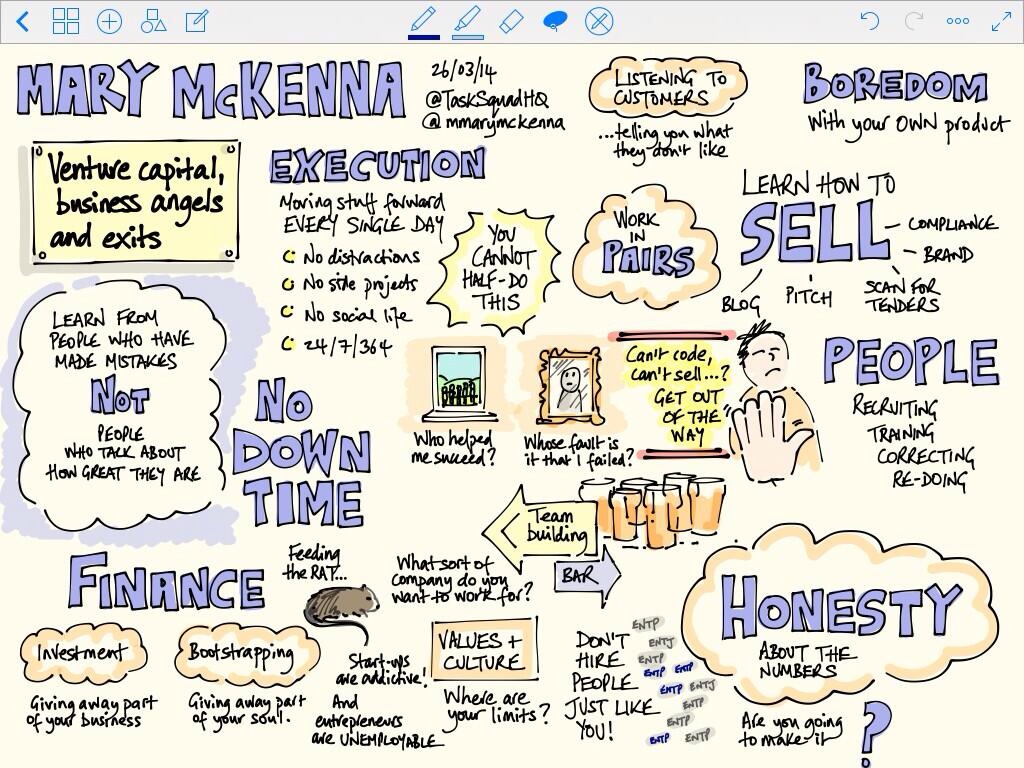
Lucy Knight’s amazing sketchnote of my talk.

Relentless execution is required to the exclusion of all else.  The odds are stacked against you in a startup.  70% will fail and won’t make it to the end of the first 18 months.  You have to move your project forward every day.  This means no distractions or other side projects.  No social life and the bare minimum in terms of spending time with your family.  I can remember my mum saying to me that she saw less of me in those first 2 years at Learning Pool when I was 20 miles down the road than she did when I was previously working in London 500 miles away.  If you’re only prepared to work 60 hours a week in your startup you might as well forget it as you’re wasting your time and everyone else’s.  You have to deal with exhaustion and sometimes the sheer boredom of it as you spend a lot of time doing stuff you don’t enjoy.  You have to use every minute productively.  Make all your phone calls when you’re hanging around.  Use time on planes to write blogs and website content.  If you go away on holiday, expect to work every day – even if you have a co-founder and team.  There’s no off button.  You’ll work 364 days in those first few years (everyone’s entitled to take Christmas Day off!).  You’ll also constantly iterate and pivot based on customer feedback, make endless decisions (often with insufficient info), do your damnedest to hit deadlines, overdeliver and do rework for customers without being paid for it (suck it up) and you’ll always be selling and doing a load of other stuff you’ve never had to do and are probably uncomfortable with.  It’s quite common to hear startup entrepreneurs talk about all the stuff they’ve gradually shed to make more time in their working week and in extreme circumstances that will include sleep.  I was discussing this with Mark O’Neill of Government Digital Service this morning & we concluded that kickstarting an early stage startup is like throwing cats against a wall and hoping some of them will manage to scrabble up to the top – not that Mark or I would ever do such a thing.  Also the knowledge that others out there might have cats with sucker pads instead of paws…

Financing – should you take investment or bootstrap.  Sometimes this decision is dictated by your product.  You can’t launch a new drug or build a semiconductor company without investment.  If you take investment, expect to be bitterly disappointed by the early doors valuations you receive and brace yourself for the late night calls and crazy demands of your investors.  They’ll all spin you that line about owning a smaller slice of a bigger pie.  If you bootstrap, be prepared for the pressures that will bring.  Complete focus on getting to revenue, constant running of your numbers, daily cashflow forecasts, making the awkward phone calls when you can’t pay your suppliers.  Having to borrow from the bank and then compartmentalising that worry.  Being really honest with yourself or yourselves about where you are against your business plan.

3.     Learning properly how to sell and all the boring stuff you have to do in order to sell successfully – scanning for tenders, writing responses, following up for feedback when you don’t win them, iterating your pitch, implementing and using a CRM (I know at least one startup entrepreneur who used to fire people for not keeping the CRM up to date), getting ISO accredited, building a brand, having a proper sales deck and collateral, constantly refreshing your website content.  The discomfort of making yourself pitch if you’re not a natural salesperson and (if you’re sensible) learning to sell in pairs.  Making smart decisions about what to chase with your limited time and resource.

My friends Martin Howitt and Lucy Knight from Devon County Council

My friends Martin Howitt and Lucy Knight from Devon County Council

        Dealing with your own people.  You can’t afford anyone experienced so you recruit for potential.  That then requires a lot of time (that you don’t really have) as the team doesn’t know much and therefore they run everything past you.  Not many people can write coherently so you’ll spend a lot of your time re-doing what others have done – usually after they’ve gone home or gone off on holiday.  I found a lot of time is spent trying to second guess the mistakes your team are going to make in some sort of order of priority.  In reality, not that much bad stuff happens.  It’s the excruciating moment when you see an email that’s gone out or overhear someone talking nonsense on the phone.  It’s useful to teach your team early doors how to make their own decisions.  If you don’t do that it will add to your own already massive decision burden.  Letting people go when they don’t work out.  This gets a bit easier over time and the interval between joining and leaving certainly shrinks dramatically.  Disappointment when people you’ve been good to let you down.  That doesn’t get any easier.  The realisation that you’ve become a worse person inside yourself over the years.

5.      Working out the people mix, building the culture you want and creating a cohesive team.  After all it’s your opportunity to create the sort of business you’ve always wanted to work in yourself.  Sticking to your values and not compromising on them.  It’s easy to own the moral high ground when you’re a PAYE person; you soon discover where your values limits lie when your house is on the line.  The stuff you find out about yourself that you may not necessarily like.  Burying that ego that’s been growing during your years in education and when you were climbing the career ladder.  As Jim Collins says in Good to Great, looking in the mirror when things go wrong & through the window when things go right (to see who else was involved in getting that good result).  The sheer amount of time you will spend with your co-founder(s) and team in those early years.

Gloria and Katrina from the Diverse Leaders Network, part of the PS Launchpad

Gloria and Katrina from the Diverse Leaders Network, part of the PS Launchpad

So – I hear you all ask – this sounds bloody awful so why bother?  That’s easy & I have 5 reasons why it’s worth it:

1.       The Prize – financial and other.

2.       The huge satisfaction you get from building something from scratch that you’re proud of.

3.       The highs are amazing.  When you make a big sale or you land a sale where you started out as the underdog.  When you win a big award.  I still remember how I felt the night the call came in telling us we were the Intertrade Ireland regional Seedcorn competition winners.

4.       Putting yourself out there as a startup entrepreneur means you meet some great people and have some incredible experience.

5. Nothing can touch being your own boss and taking control of your own destiny – no matter how terrifying that can be from time to time.

I h  I hope this rather long blog has been useful to someone out there and I’m dedicating it to all the people who helped us when we needed help – you know who you are.  If you have any comments or questions feel free to add them in via the comments section below and I’ll do my best to answer them.  Good luck to all the PS Launchpad projects by the way.  I’m waiting for you guys to connect with me via the usual channels!

Secrets of a Professional Tweeter

Last week I was pleased to join the Northern Ireland Chamber of Commerce to speak at their Creative Connections event in the Grand Opera House in Belfast.

The real treat of the evening however was listening to David Levin.

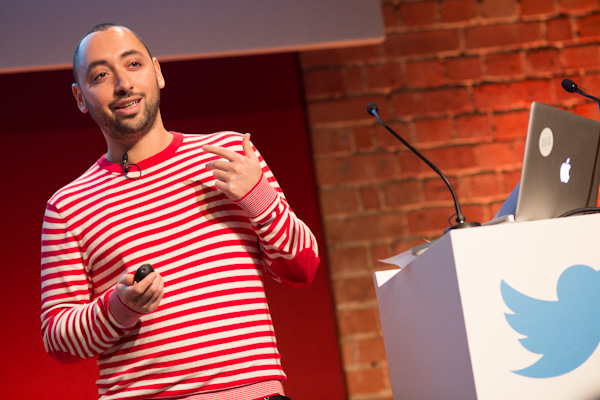
David Levin - professional tweeter and freelance writer

David Levin – professional tweeter and freelance writer

David is one of the UK’s handful of professional full time tweeters.  That’s what he does for a living – all day every day.  He’s worked for BBC One’s The Voice, Channel 4, Radio 1 and brands such as Adidas and MoneySupermarket.  He started off by running the Twitter account for the Dolphin pub in Hackney (@The_Dolphin_Pub) during the London riots and his fame and demand for his unique service has grown from that success.  His objective is basically to give personality to a brand (he writes the tweets for loads of brands as well as a handful of celebrities) and to attract followers & achieve high numbers of retweets.

Can you believe there is such a job?  I had no idea.  It works in two ways – either David sends his client a load of pre-written tweets & they just select some & post them up themselves or he does the tweeting for clients within an agreed set of parameters & in a certain brand approved tone of voice.  Fascinating eh?  I bet there are a few people reading this blog that would fancy that as a career.

His talk encouraged lots and lots of questions from the audience and we discussed everything from how annoying it is when you notice your competitors have been buying (usually overseas based) followers to how you should respond to criticism of your organisation posted up on Twitter & how it’s best not to go into complete meltdown as some brands have done to their detriment (such as Twix and many others).  A story has just broken earlier this week about Nottinghamshire Healthcare Trust and their manipulation of user content on their website (it’s alleged they have been removing critical user comments and augmenting positive comments with comments from their own staff) so it will be interesting to see how they handle that.  He also told us a very funny & slightly risque (for the crowd present anyway!) about how when he was doing some tweeting for the Apprentice, he mistakenly thought that the wattle named by a contestant as the least favourite part of his body was a colloquial reference to his genitals & David helpfully tweeted as such.  Hahaha.

L-R David McConnell (Arts Council NI), Louise Turley (NI Chamber), David Levin, Mary McKenna

L-R David McConnell (Arts Council NI), Louise Turley (NI Chamber), David Levin, Mary McKenna

We all laughed when someone in the audience explained how she had been “knocking her pan in” to get new Twitter followers – poor David (not being from Northern Ireland) had no idea what she was talking about.

My own talk was about How to Build a Kick Ass Business Network and my slides, if you’re interested in taking a look, have been uploaded to

Slideshare.  You can access them here http://www.slideshare.net/MMaryMcKenna/how-to-build-a-kick-ass-business-network

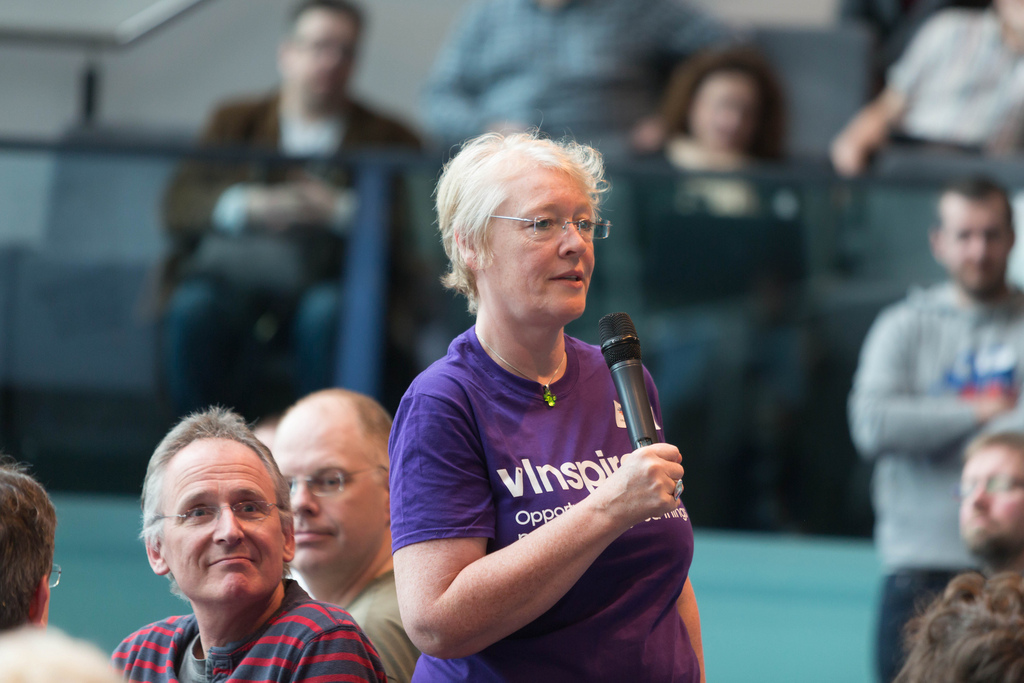
Mary McKenna speaking at NI Chamber Creative Connections event

Mary McKenna speaking at NI Chamber Creative Connections event

My messages to the group at the event were all about how in today’s world, if you’re not visible and active online and easy to find & connect with then there are whole worlds of conversations that are happening out there that you aren’t part of.  I’d like to cross link this blog with an excellent recent blog on this topic from Emer Coleman.  Again – you can read Emer’s blog here http://www.emercoleman.com/2/post/2014/03/why-senior-leaders-in-ireland-need-to-improve-their-online-presence.html

In case you’re wondering what David’s secrets to success are in notching up those high numbers of retweets, his top tips are to use quizzes in your tweets and also to make frequent references to star signs.

Interested in your views about this and also any hints and tips you might like to share with the rest of us.  As always, please do continue the conversation in the comments below.
5 immediate improvements we can make in the charity sector


At #UKGC14 - my first outing in a vInspired t-shirt telling the Task Squad story (Photo by David Pearson)

At #UKGC14 – my first outing in a vInspired t-shirt telling the Task Squad story (Photo by David Pearson)

Friday marked the completion of my first 4 weeks working in a charity – ever.  In the course of my long and varied career I’ve so far worked in local and central government, been a freelance consultant, temped in a trade union, spent time in countless (and many pointless) private sector organisations, done a bit of quango-hopping and I’ve worked in or founded 5 start-ups.  On 20 January I joined Task Squad as its first ever CEO.  Task Squad is a brand new social innovation project from national well known volunteering charity vInspired.  Our mission is to get young people into paid employment by matching them to entry level micro working opportunities.

I thought 4 weeks in might be a good time to reflect upon and write down my experiences so far before I lose them.  It would also be good to get feedback from others at this early milestone – if I’m truthful I’m seeking reassurance that I’m progressing in the right direction and haven’t missed or misinterpreted anything.

Some of you will know me as a tech entrepreneur and one of Learning Pool’s co-founders.  Many, many people have asked me why I’ve chosen to work in a charity at this time instead of rushing off to start another private sector business.

The reality is that charities and social enterprises are doing a lot of innovative and interesting things.  In the past 4 weeks I’ve been introduced by Task Squad team members and funders to loads of wonderful projects bunged full of enthusiastic and motivated people who work hard and are as committed as any startup team.  What the projects I’ve been interacting with so far have in common is they’re all using tech for good and they’re all being run by teams of social entrepreneurs.

Anyway – it goes without saying that charities and social enterprises exist for good reasons and to do good things.  However, these are the 5 things that have bugged me a bit in my first month.

1.       There’s so much duplication within the sector.  What I mean is there’s so many projects doing what appears to me to be the same thing.  Government and the big funders are partially to blame by funding similar projects in isolation instead of forcing teams to merge and work together.  It would be useful if there was a matching service for small charities or social innovation projects that want to merge to save money and cover more ground.  Maybe there is?

2.       The entire sector is gripped by “accelerator” fever.  The prevalence of and participation in social accelerator programmes is reaching epidemic proportions.  Every which way I turn I uncover another one.  There has to be a better way for the sector to learn.  Also – who is paying all for all these growth accelerators and is that a good use of money.

3.       The working environment seems very formal and structured to me – even in a charity that’s relaxed and informal in many ways.  A lot of internal meetings take place and a lot of time is spent on governance type activities…what I describe as doing things the right way rather than doing the right things.  I wonder if there are ways to improve productivity whilst preserving integrity and just getting on and doing more “stuff”.

4.       Trustees appear to me to be underutilised by many charities and I don’t know why this is.  I’m a trustee of a couple of not for profit organisations.  I joined because I wanted to help them make a difference and they were looking for someone with my particular skill set.  I want to be useful.  I don’t want to be distant and see only the senior team at quarterly board meetings.  I’m sure this must work better in some places and I’d be interested in finding out who does this well and how they’ve made that happen.  Please send me any good examples you have of charities or not for profits who’ve got a great relationship with their trustees and who are getting the best out of them.

5.       Why isn’t there a central directory of all social funders and investors where they publish all their live funds?  This would make it easier for charities and social innovation projects to find and compare them and it would also significantly improve their dealflow.  Again – maybe there is and if so I would be grateful if someone can point me to it.

Apologies if I’ve dwelled upon too much of the negative in this first blog on this topic.  I don’t mean to be harsh as there’s so much good work happening generally and I personally feel completely elated to be working at Task Squad.  My interest is in helping everyone help each other to cover more ground with the limited resources we all have at our disposal.

I need your comments more than ever.  Let’s get some conversations started!

What’s next?

Dear Friends and Readers, I’m delighted to announce that I’m joining the awesome vInspired

Photograph by Tom Phillips

Photograph by Tom Phillips

team upon my return to London later this month.  For anyone not familiar with vInspired, it’s a leading UK charity founded back in 2006 with a mission to provide young people aged 18-25 with an opportunity to do good things by matching them & their skills to suitable volunteering opportunities.

I’m joining as first CEO of vInspired’s brand new Task Squad service.  Task Squad’s core aim is to help young people from the vInspired community with proven experience of volunteering to take the next steps into paid employment.  There will be three of us in the initial start-up team including Sam Sparrow & Dan Bond although the rest of vInspired will be there to help and support us.

Our online platform is built & operational already and our first few anchor companies (Which?, Sidekick Studios and a few others) have already started posting up some vacancies.  You can take a look here www.tasksquadhq.com  The basic premise is that companies often need an affordable extra pair of hands for a short term at short notice and with the minimum of fuss.  We have a ready supply of young people within the vInspired community who are eager to work.  Our young people are able to respond to requests quickly, they want to earn some money and they want to get some work experience for their cv.  Everyone wins.

My initial focus as CEO is going to be to start building Task Squad’s profile and to get loads more companies and organisations using Task Squad & posting up tasks.  All of you can expect a call from me…

The project ticks a lot of my boxes personally.  It makes use of technology for good, it involves young people & it’s an early stage startup – so I’ve been very lucky to be in the right place at the right time and I’m excited about getting started & getting some momentum going along with Sam and Dan.  I know that many of you will know about vInspired already and will want to support us with our new initiative.  For organisations who don’t have any short term resourcing needs, we’re working out a model whereby you can donate to Task Squad from your CSR budget & we’ll use your money to fund a young person to do some work at a charity instead.

Wish us luck & please send me your comments & ideas.

All change…

Learning Pool Team

Learning Pool Team

In the many years I’ve worked in startup land I’ve watched other founders and CEOs hang around for far too long – hell I’ve probably even worked for a few of them – and I’ve always been pretty determined that I wouldn’t repeat the same mistake myself…so after 7 long & happy years as part of the Learning Pool senior team I’m disappearing back into the tech startup scene proper.  Working in a scale-up can be great – but it isn’t for me.

In reality what this means is that I’ll continue to do some stuff for Learning Pool that I really love (strategic sales, profile building, input to long term strategy) but less of the operational day to day matters that if I’m honest with myself I don’t really enjoy.  I’m going to get out of the way & give my co-founder space to build the company to the next stage with help from our very able management team.

So…what’s next for me?  I’m going to return to working with (most definitely) early stage (most likely) tech startups with (most probably) quite young teams, helping out with all those things that many first time entrepreneurs find troublesome – raising finance, finding & managing investors, picking which product or version of a product to back, getting to revenue on a shoestring, determining the best market entry strategy – all the stuff I love doing.

And guess what – I CAN’T WAIT.

So how do I feel at the end of a day spent mostly on the phone breaking the news to my team and a few trusted friends and associates?  Most of all I feel proud of what I’ve achieved over the past 7 years.  We’ve built a robust, growing company with a fabulous community of customers, we’ve assembled a world class high performing team and we offer scaleable and useful technology at an affordable price.  I also feel dizzying waves of excitement that are masking a sneaky bit of underlying sadness.

I’ll leave you today with a quote from Alexander Graham Bell “When one door closes another opens; but we often look so long and so regretfully upon the closed door that we do not see the one which has opened for us.” 

Watch this space!  I hope you all have comments 🙂

10 Cardinal Rules of Business Networking for entrepreneurs (and others)

GIEF Crowd

Assembled crowd in Dublin Castle when I arrived

In my world it’s quite common for entrepreneurs who are a bit further ahead than the rest of us to put something back in terms of the people following in their trail.  This can happen via formal networks (Digital Circle, Irish International Business Network, Global Irish Network, Chambers of Commerce, CBI, etc – we all have plenty of groups we’re members of) or it can be more informal – people you already know or meet along the way or via events that provide access to the Great & the Good (Culturetech in Derry is a recent example of a fabulous event that was bunged full of tech world glitterati as was the EBN Congress event run by NORIBIC in May with illustrious keynote speakers such as Steve Wozniak and Tim Smit).

Being able to ask questions of the people further ahead is mission critical to an entrepreneur (and corporate world managers I guess).  Even better is using networking to find yourself a small number of mentors and advisors with whom you can start an ongoing relationship.  Having personal access to leaders with proven success is a well known piece of the entrepreneur puzzle and one which significantly improves a startup’s chances of making it to the end of that all important first year.

Yesterday I attended the 3rd Global Irish Economic Forum in Dublin Castle.  It was hosted by the Taoiseach & the Tanaiste and is a biannual gathering of 250 of Ireland’s most influential & successful people.  This year the Tanaiste decided to include some Northern Irish businesses amongst the 100 SME businesses that are invited & that’s how come I was there.  It was terrifying.  I only knew two people there out of two or three hundred when I arrived.

One of the most frequently used phrases I heard yesterday was “I will help you if I can” – but as an entrepreneur how do you respond to and action that offer in order to get most benefit out of it for your company.  I thought about this a lot on the way home last night & decided to write a quick blog.  As usual, the list below is not finished or complete so please do add your own tips in the comments section & we’ll all be pleased to read those later.

  1. Have an elevator pitch and be ready to trot it out anytime & anywhere.  Keep it brief or you’ll lose your important audience.  Be able to flex it so that you can give a different version dependent on what sort of person you are pitching to and what country they are from – are they a potential door opener, investor, mentor.  If you aren’t good on your feet you need to practice this to the point where it just rolls out effortlessly freeing you up to watch their body language & listen & respond to their points/questions.  If you can’t do this, don’t put yourself through the pain of going to this sort of event.  Instead find someone who can do it for you.
  2. Don’t be afraid to approach people and always ask for help – when you get to a place where you feel you are comfortable to ask for some support just go ahead and ask.  Hardly anyone ever says no.  I’ve only been turned down by one person – it’s someone you all know so DM me if you want me to spill the beans – I can’t do it on here!  But it was only one person and I’ve asked hundreds for help.
  3. Don’t be afraid to be ambitious – in my group yesterday someone asked if a couple of the US heavy hitters could help her secure Hillary Clinton as a keynote speaker for her conference next year.  Time will tell on that one!
  4. Before you ask, be very clear about what it is that you want them to do for you.  I have a couple of “open” offers right now where people have offered to help me with “something” – but I don’t yet know what I can best use that offer for.  Help could be making an intro to someone to joining your board or investing in your company – and anything on the spectrum in between.
  5. Never expect someone like this to do any heavy lifting or grunt work for you, that’s your job.  What I mean by that is you have to do the homework and present the information to them so that all they do is give you an opinion or a steer – don’t expect they will do your market research for you.  If for example you were looking for a channel partner in an overseas territory, research who the players are, what their characteristics and pros/cons for you are & then ask for some advice in which 3 out of the 10 in existence are best for your company to approach.
  6. Be 100% serious when you execute on whatever it is you’ve asked the person to do.  If someone opens a door for you at your request then do your homework & don’t screw up the sales pitch when you get there.  It’s not just your own chips you’re using – it’s the chips of everyone similar to you that’s following on behind you.  I heard one US mentor describe this yesterday as “political capital”.  I’ve also heard it called “reputational capital”.  What does that mean? – I make an intro for you, you show up half prepped or don’t turn up, I’m now in a much worse place with the contact I’ve sent you to.  No pressure but be careful what you wish for and only engage if you know you are ready.
  7. Some access is for a one-off offer & some might lead to an ongoing relationship – be careful to work out which it is early doors.
  8. Related to the above point, if it’s the start of an ongoing relationship you probably need to meet a few times before both parties are comfortable.  The first time you meet just establishes that you like each other & possibly have a common interest.  You now need to get to know each other a bit better.  As the “recipient”, you need to do the running to make sure the relationship develops.
  9. When you have a new advisor in your circle, don’t just use the red phone and ring them when you need a decision made or have a crisis.  You’ll get far more out of the relationship if you keep them up to speed with what you’re doing & how things are going as you go along.  Again, it’s up to you to find a way to do that & put the work in to make it happen.  These guys are never going to be chasing you.
  10. Finally – when you’re at this sort of event, be brave and approach strangers and start up a conversation.  Everyone is there because of one or more vested interests of their own and they want to talk to you.  Never forget that people prefer to do business with people they like so at initial brief meetings like these be pleasant, don’t argue and regard it as a way of “interviewing” and filtering those that you will follow up and keep in touch with.  I came away yesterday with a handbag stuffed full of business cards and today will be spent following up with the people I met.

A few weeks ago at Culturetech festival in Derry I was lucky enough to meet & chat with Wilson Kriegel (former COO of OMGPOP, creators of Draw Something) and he said something that has stayed with me.  You start forming relationships the day you are born; growing and nurturing those relationships is key to the success of an entrepreneur.  Yep – at the end of the day business is all about people – nothing else really matters.

If you’re just getting started with networking, here’s a link to an earlier blog I wrote a couple of years back https://kickingassets.co.uk/so-you-want-to-network/


Harnessing the power of the newbie

I’ve recently (in the last month) joined the Board of SCIE (Social Care Institute for Excellence) as one of the new trustees and I’m very much in the mode of newbie at the moment, trying to learn as much as I can about UK social care.  It’s an unusual feeling for me to be so far out of my comfort zone.  Last week I attended a SCIE workshop in York with 50 or so people from across the health and social care sector.  Everyone was very friendly, welcoming and keen to answer the (many) questions I asked colleagues at my table but with all the jargon that’s used in the sector I did feel a little bit like a fish out of water.

In the afternoon we participated in an ideas gathering exercise.  We were asked to write ideas on cards, stick them on boards around the room and then read everyone else’s ideas – and if we liked one, put a blue sticker on it.  Genius way to collect ideas & feedback in an anonymous and non confrontational way.

As you are all aware and will no doubt have observed in your own place of work, the more senior you become in an organisation, the more difficult it is to get anyone in your team to disagree with you.  This is well documented and really quite frustrating when it happens.  CEOs go to great lengths to find ways around this.  It’s the reason why you should choose non executive directors who will be confident enough to challenge and disagree with you.

I wandered around and put two ideas up on the boards.  By the end of the session they were blue dot free.  No-one had voted for them.

Lloyd Davis at Tuttle Club

Lloyd Davis at Tuttle Club

I thought about this from time to time over the next day or so and then at Friday’s Tuttle club, discussed it quietly with Lloyd Davis and Tony Hall.  Stalwarts of the sensible both of them.  We concluded that my ideas had not been bad ideas per se – they were just completely out of kilter with the way that everyone else in that room thinks and expresses themselves.  They were too “different” for anyone to agree with them or probably even relate to them.  We debated for a while between ourselves and decided that it probably takes about 3 months in a new role for someone to become completely aligned with everyone else in the company or sector.

Once that happens, you’ve gained an assimilated team member but you’ve lost that fresh pair of eyes that you worked so hard to bring in and any new perspective they brought with them.

I’m interested in ways you think organisations generally can better harness the power of the newbie and it would be great if people out there who already do this well can share with the rest of us.  Please add your comments below.

Good to be back blogging again!